Introduction
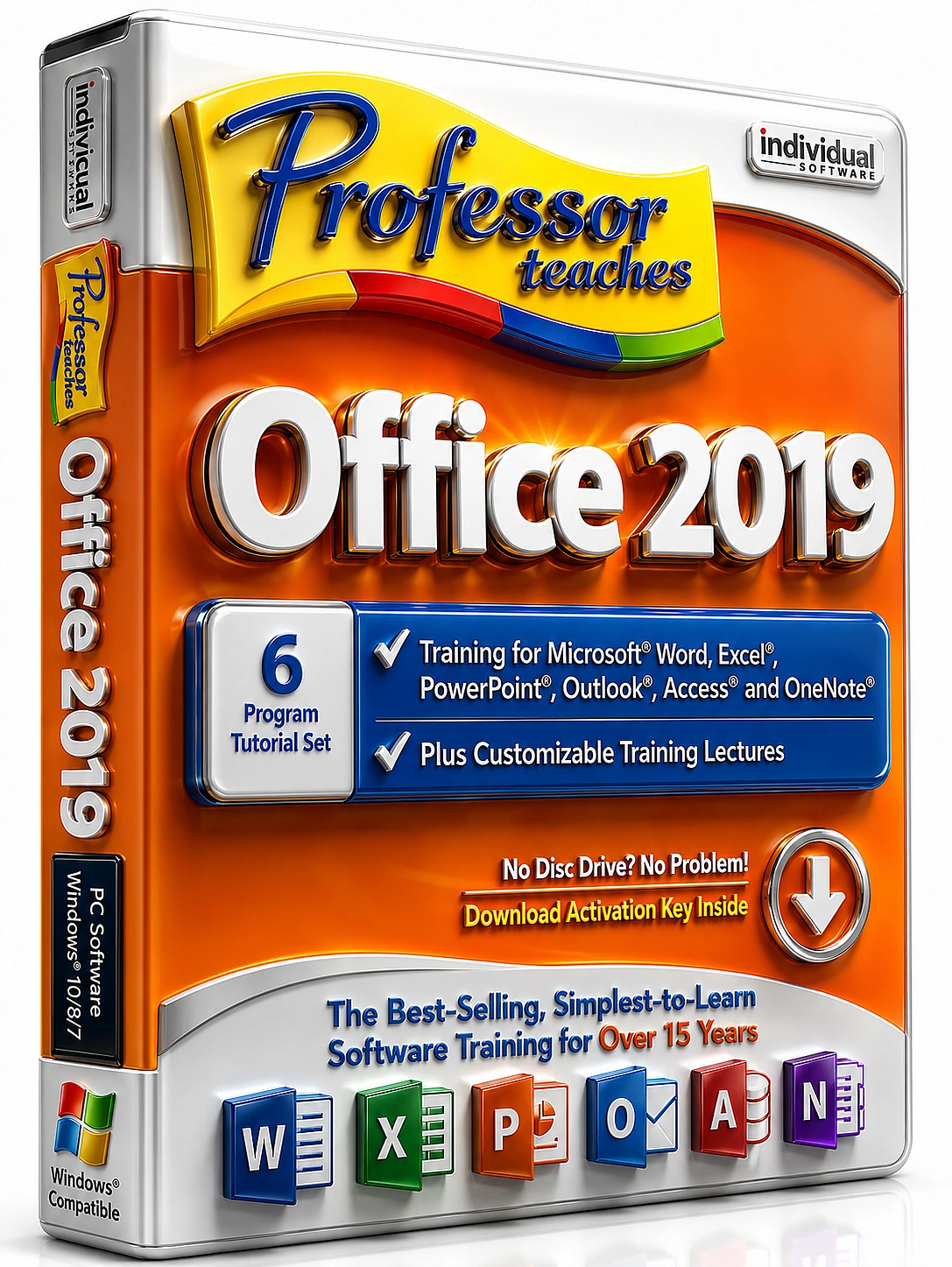
Deploying Office 2019 across an enterprise without a structured onboarding program leads to inconsistent productivity and increased help desk ticket volume. Many cloud-based training platforms introduce bandwidth bottlenecks, recurring subscription costs, and data egress concerns in air-gapped or tightly secured environments. Professor Teaches Office 2019 is a 1 GB on-premise training package that delivers interactive, simulation-based lessons for Word, Excel, PowerPoint, Outlook, and Access entirely from local storage. It positions itself as a self-contained, deployable training asset for IT-managed workstations, removing the need for internet access and enabling SCORM-compliant progress tracking. This review examines its resource overhead, simulation accuracy, and integration feasibility for enterprise-scale Office 2019 rollouts.
Core Architecture and Functional Mechanisms
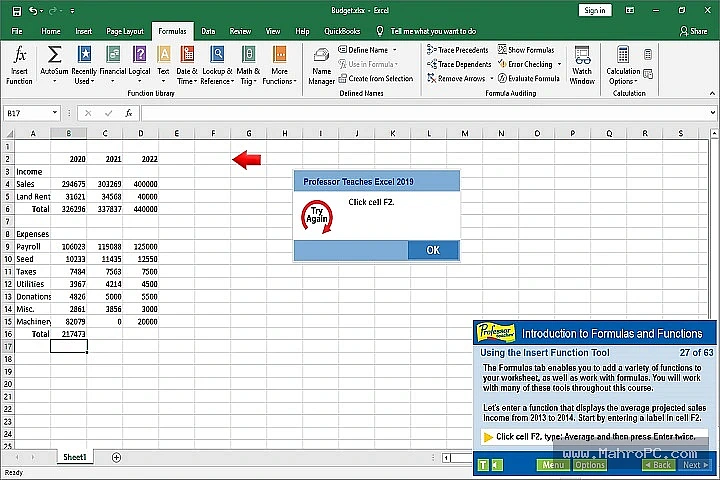
The application bundles a static simulation engine with a 1 GB asset repository containing pre-rendered Office 2019 UI captures, voiceover narration audio files, and a local assessment database. Users interact with realistic, non-live interface replicas where clickable hotspots are mapped to correct action sequences. No actual Office installation is required for training. Voice guidance plays directly from the installation directory, avoiding streaming latency.
Progress and quiz results are committed to a per-user SQLite database stored in the user profile folder. Completion certificates and performance summaries are rendered as printable PDFs or exported as SCORM 1.2/2004 packages and CSV logs.
You may also like :: Adobe Acrobat Reader DC 2026
Pros & Cons
-
Pros:
-
Fully offline architecture eliminates external bandwidth use and supports deployment inside isolated, high-compliance networks.
-
1 GB of locally cached simulation assets loads instantly from SSD, removing buffering or latency from online course delivery.
-
Native SCORM and CSV export enables direct integration with existing corporate learning management systems for audit trails.
-
MSI installer supports silent, unattended rollouts via Group Policy or SCCM across the entire managed workstation fleet.
-
-
Cons:
-
All interactive screens are locked to the Office 2019 interface; the training does not adapt to newer Office releases without a separate version purchase.
-
Fixed per-seat licensing with individual activation keys adds administrative overhead for bulk procurement compared to volume or site licensing.
-
The 1 GB immutable footprint per machine may strain persistent storage allocations in non-persistent VDI pools.
-
Key Technical Capabilities Analyzed
Interactive Simulation Engine
Learners perform tasks on clickable Office 2019 interface replicas. This isolated environment prevents accidental changes to live documents during training.
Progress Tracking Database
A local SQLite database records lesson completion and quiz scores for each user profile, enabling offline progress review before LMS sync.
SCORM Export Pipeline
Batch generation of standard-compliant packages allows direct bulk import into corporate LMS platforms without manual conversion.
Multi-Application Coverage
A single 1 GB installation covers five core Office 2019 applications, reducing the need to deploy separate training tools for each program.
You may also like :: Abelssoft CryptBox 2026 Review
Enterprise Infrastructure & Optimization Guide
-
Distribute the MSI via Microsoft Endpoint Configuration Manager with the silent flag to deploy without user interruption.
-
Add the training program’s installation folder to antivirus and anti-malware exclusion policies so real-time scanning does not delay media file loading.
-
For VDI environments using non-persistent desktops, place the 1 GB program directory on a persistent virtual disk or application layering solution to avoid reinstallation at each logon.
-
Ensure the user profile location allows write access so the progress database and SCORM export files can be created without permission errors.
-
Disable Windows Search indexing on the application directory to prevent constant disk I/O from content crawling large media files.
-
Install on an NVMe SSD. On rotational hard drives, sequential read latencies during lesson loads can exceed 5 seconds, impacting training flow.
Hardware & System Requirements
| Component | Minimum Configuration | Recommended Enterprise Specification |
|---|---|---|
| Operating System | Windows 10 (21H2) 64-bit | Windows 11 (23H2) 64-bit |
| CPU | 2 GHz dual-core | 3 GHz quad-core |
| RAM | 4 GB | 8 GB |
| Storage | 2 GB free (HDD) | 1 GB free (NVMe SSD) |
| Display | 1024×768 | 1920×1080 |
| Audio | Integrated speakers | USB headset for narration clarity |
You may also like :: Keysight PathWave EM Design Review 2026
Operational Decision Matrix (Verdict)
-
Deploy If: The organization is running Office 2019 on managed workstations and needs a fully offline, SCORM-trackable training solution. Bandwidth constraints, air-gapped networks, or compliance mandates require local content delivery. IT can accommodate 1 GB disk usage per machine and manage per-seat license keys within existing procurement processes.
-
Avoid If: The fleet has already transitioned to a newer Office version with a different interface, VDI storage allocations cannot spare 1 GB per user, or bulk concurrent-license models are a hard procurement requirement. The tool cannot retrain users on cloud-only Office features.
Frequently Asked Questions
Why does simulation video stutter on a machine that exceeds the minimum specs?
This often points to the asset files residing on a fragmented spinning disk or a network drive. Relocate the installation to a local NVMe SSD to maintain sustained sequential read throughput above 50 MB/s.
How is progress recovered if the user profile is accidentally deleted?
Progress is stored in a per-user database inside the user profile folder. If the profile is lost, progress cannot be recovered unless previously exported as SCORM or CSV to a network location. Schedule regular exports via the built-in batch tool.
SCORM packages are rejected by the LMS with a “manifest not found” error. What causes this?
The export path likely contains special characters or the folder name has trailing spaces. Export to a short local path, then manually verify the ZIP structure before uploading.